if mueller is fired what happens to the evidence
WASHINGTON — He was the FBI agent so primal to the Trump-Russia investigation that he came upward with the code name: Crossfire Hurricane, from the lyrics of a Rolling Stones song that happened to exist in his head.
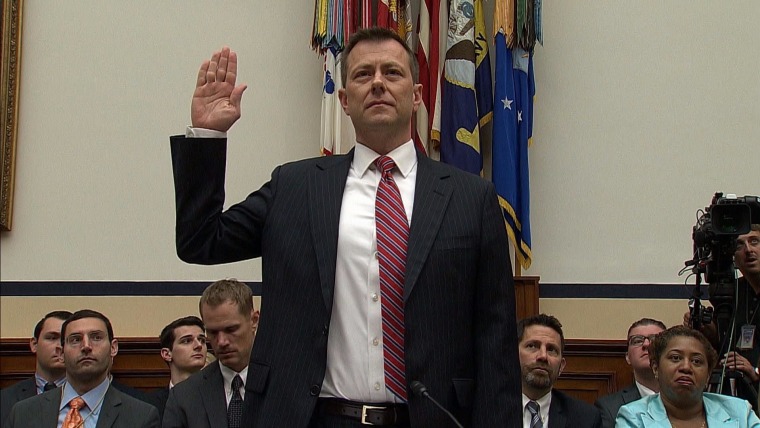
And he was the aforementioned FBI agent whose anti-Trump texts on a regime telephone — exchanged in "intimate" conversations with an FBI lawyer who wasn't his wife — gave President Donald Trump and his allies powerful ammunition they used in their efforts to discredit the investigation.
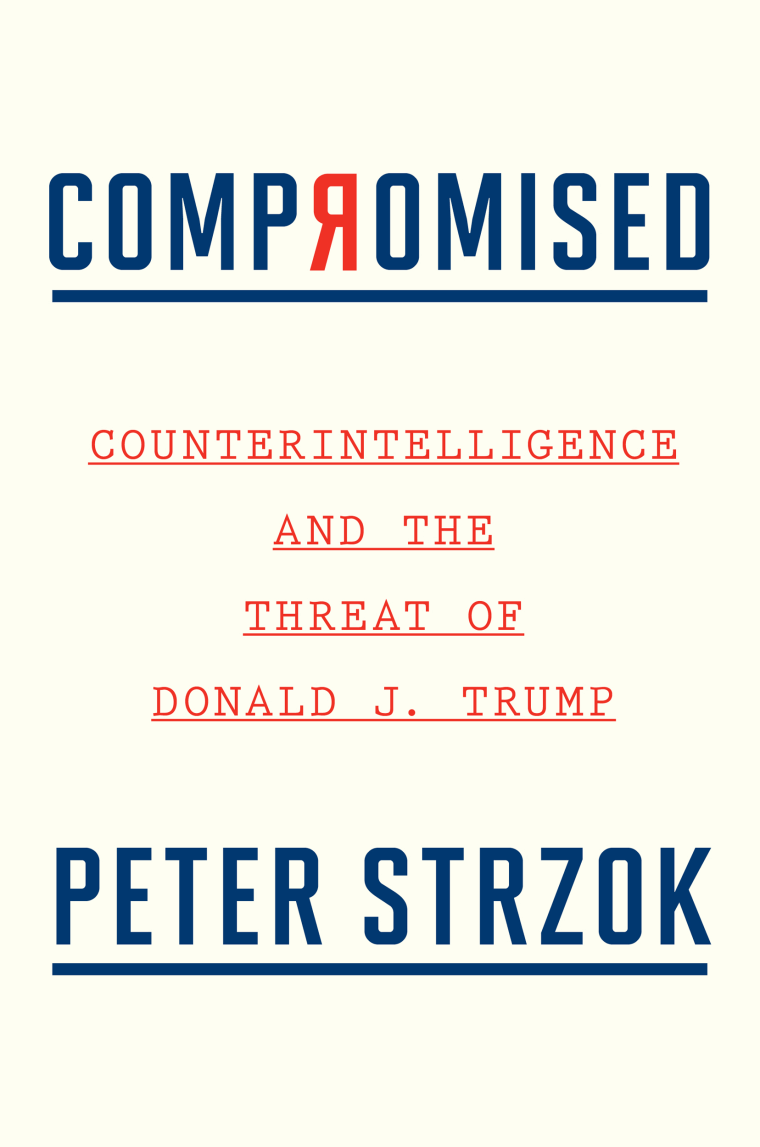
Now Peter Strzok, a busy counterintelligence amanuensis who was fired by the bureau he loved, is telling his story in a new book, "Compromised: Counterintelligence and the Threat of Donald J. Trump."
Despite the cinematic title, Strzok reveals no new evidence that the president acted as a tool of Russia. Just his insider account provides a detailed refutation of the notion that a group of anti-Trump citizenry of the deep state cooked up the Russian federation "hoax," as Trump likes to call information technology, to take downward a president they didn't back up.
To the contrary, as he tells it, career public servants inside the FBI and the Justice Department were gobsmacked in 2016 by what they uncovered about a presidential campaign that seemed to find unlimited fourth dimension to meet with Russians, practically inviting exploitation by a foreign antagonist.
"I was skeptical that all the different threads amounted to anything more than than bumbling incompetence, a confederacy of dunces who were as well impaired to collude," Strzok writes, summing up his view of the case for a Trump entrada conspiracy with Russia before he was removed from special counsel Robert Mueller'southward investigation in July 2017 over his biased texts. "In my view, they were almost likely a drove of grifters pursuing individual personal interests: their ain coin- and ability-driven agendas."
Only he also believed, he wrote, that even if Trump didn't formally conspire with the Russian election interference operation, the president was badly compromised. He was compromised, Strzok writes, because of his questionable business dealings, the hush coin paid on his behalf to silence women, shady transactions at his clemency and, most importantly, "his lies nigh his Russia dealings," including his undercover 2015 effort to build a Trump Tower in Moscow even as he told the globe that he had no business with Russia.
"Putin knew he had lied. And Trump knew that Putin knew — a shared agreement that provided the framework for a potentially coercive relationship between the president of the U.s.a. and the leader of ane of our greatest adversaries," writes Strzok, who was deputy banana manager of the FBI's Counterintelligence Division.
"This unproblematic fact could explicate something that made no sense otherwise: why Trump repeatedly ... (chose) the class of activity that made little sense in the context of U.Due south. national security but that clearly benefitted Russian federation," he writes.
In a statement to NBC News, White House spokesman Brian Morgenstern chosen Strzok'due south account "utter nonsense" and argued that neither Mueller nor Congress "have found whatever wrongdoing by the President." He added: "Strzok is a joke, and his book isn't worth the newspaper it's printed on. "
Counterintelligence agents are tasked with rooting out foreign influence, and any such agent worth his or her salt would accept been incompetent not to investigate whether Russia had leverage over a new president, Strzok writes. That'due south why Strzok and his FBI colleagues took the historic step of opening a counterintelligence investigation into Trump later he fired FBI Managing director James Comey in May 2017 — an investigation Strzok says he earlier had opposed.
Comey's firing also led to the appointment of Mueller, a old director of the FBI, as special counsel. Strzok, who had likewise played a primal function in the investigation of Hillary Clinton's emails, joined his team.
"If there was ane person in the country who could decide whether I was right to be concerned, it was Robert S. Mueller 3," he writes.
But Mueller never did answer the question of whether Trump was "compromised" by Russia — he never even tried to, according to the massive report he issued describing his findings.
Mueller conducted what was purely a criminal investigation designed to determine whether crimes were committed as role of Russia'south election interference performance and to prosecute whatever other crimes he uncovered. Prosecute he did: 37 indictments or guilty pleas resulted from his investigation.
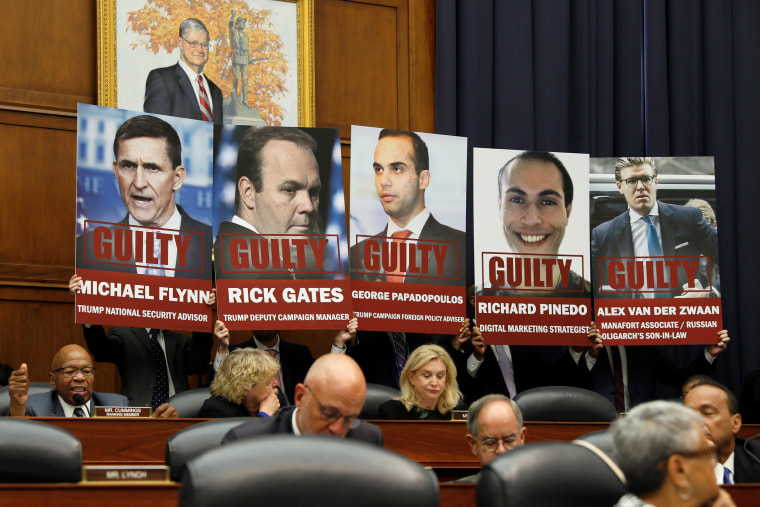
Of the four original subjects of Crossfire Hurricane — one-time campaign chairman Paul Manafort, former national security adviser Michael Flynn, onetime campaign aide George Papadopoulos and onetime campaign adviser Carter Page — two, Manafort and Papadopoulos, went to prison, and a third, Flynn, pleaded guilty and is pending sentencing amid a legal dispute over whether his case should exist dismissed.
But none of them — and no other American — was accused of conspiring with Russian federation. In his report, Mueller said he couldn't discover enough prove to bring criminal charges alleging such a conspiracy, even every bit he punted on the question of whether Trump obstructed justice.
Whether crimes were committed is a different question from whether Russia had a agree over the president, however. Who was supposed to answer that counterintelligence question? Who would wait at whether Trump had, in fact, benefited from massive investments by Russians, as his son once said he did? Or whether there was any reason to think Putin could blackmail him?
Strzok, fifty, an Army veteran who worked about of his two-decade FBI career chasing Russian spies, says information technology was the job of the FBI'due south Counterintelligence Segmentation. Just Strzok writes that at the time he left the investigation in 2017, "nosotros were still looking for the right fashion to investigate those counterintelligence concerns."
A recent assessment past the House Intelligence Commission, which has sought classified briefings on the affair, says the FBI "has not investigated counterintelligence risks arising from President Trump's foreign fiscal ties."
Strzok said in an interview published Friday in The Atlantic that he believed the FBI'due south counterintelligence inquiries into Trump "largely died on the vine," which two people familiar with the affair confirmed to NBC News.
It'south doubtful, current and onetime U.S. officials say, that anyone at the FBI e'er saw Trump's tax returns or looked into whether he borrowed money from Russian oligarchs — something many Americans assumed was happening during the Mueller probe.
Was that a failure? Mueller is a revered figure among the FBI agents he in one case led as director, and Strzok doesn't have a cross discussion to say nearly him. He doesn't speak to the consequence of whether Mueller, 76, a Vietnam combat veteran, was in full command of the massive investigation, a question that arose when Mueller testified earlier Congress and didn't appear to be conversant with pregnant elements of his written report.
Strzok argues that what Mueller laid out in his indictments and his report — a president who was eager and willing to have help from the Russians, even if he didn't conspire with them to get it — was plenty to plant that Trump was compromised. Simply fifty-fifty if that's true, it wasn't compelling enough for House Democrats to bring impeachment charges. Trump ultimately was impeached based on his deportment with regard to Ukraine, with no mention of Russian federation.
A bipartisan Senate Intelligence Committee report issued final month was widely seen equally far more damning and detailed than the Mueller written report on the question of the Trump campaign's interactions with Russians. It also examined the counterintelligence implications of some of Trump's relationships, delving into a possible blackmail concern around allegations that Trump strayed from his 2d marriage, to Marla Maples, while on a trip to Moscow in 1996.
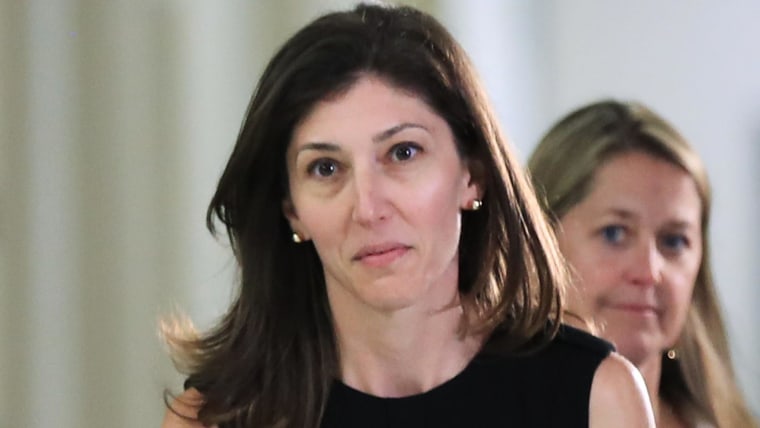
Strzok doesn't delve much into the limits of the Mueller study, perhaps because by the fourth dimension that was playing out, his life had been turned upside down. Many of the 40,000 texts he exchanged on government phones with FBI lawyer Lisa Folio, now an MSNBC legal analyst, were made public. In a court certificate, an FBI lawyer later highlighted that Strzok had called Trump a "disaster" in 2016 and suggested that "[westward]e'll cease" him from taking office.
The FBI fired Strzok in August 2018 after the deputy director decided that his conduct had inflicted "long term damage" on the FBI's reputation.
Trump quickly moved to make him the bogeyman of the "Russian federation hoax," and Strzok writes with outrage about what it'due south like to be personally attacked more than 100 times on Twitter by the president.
At one point, Trump accused him of treason, and FBI agents had to warn Strzok that he had been on a list of targets kept by Cesar Sayoc, a Trump supporter from Florida who was arrested after he sent 14 pipe bombs to perceived political enemies.
Download the NBC News app for breaking news and politics
The conspiracy theory put forth past Trump and his allies — that a group of rogue law enforcement officials set out to frame him — is refuted in the volume past Strzok'due south methodical explanations of the FBI'due south decisions in the face of disturbing prove.
And Strzok writes that the conspiracy theorists have never convincingly explained why, if he and his cohorts had wanted to take Trump down at all costs, they didn't leak the fact that the FBI was investigating through much of the 2016 election whether Trump and his aides were under the sway of a foreign antagonist. Instead, the FBI took pains to make sure that that never emerged during the campaign, even as the media closely covered the Clinton e-mail scandal. Voters went to the polls non knowing.
As for his own acquit, Strzok spends but a few lines of the volume reflecting on it.
He doesn't mention Lisa Page past name, opting non to delve into his personal life. He says he regrets having sent the texts and acknowledges having made "some terrible personal decisions" that hurt his family and the FBI.
But he also believes his firing was politically motivated and unjustified, and he is suing over it.
He points out that FBI employees often utilise their government phones for personal messages and are allowed to accept individual political opinions. The Justice Department'south inspector general ultimately found no show that political bias infected the Russian federation investigation, Strzok notes. The wild conspiracy theories about some of his texts were found to be baseless.
All true, only it fails to account for the damage washed to the FBI'southward brownie, said NBC News national security contributor Frank Figliuzzi, a erstwhile FBI counterintelligence chief.
"Strzok saw a confirmed threat and moved to investigate it," said Figliuzzi, a vocal Trump critic. "Sadly, his valid actions have been usurped by his personal conduct and judgment, which caused some to perceive the bureau as political.
"He was fired for the impairment he did to the FBI's reputation, and rightly so."
Source: https://www.nbcnews.com/politics/donald-trump/fbi-agent-who-helped-launch-russia-investigation-says-trump-was-n1239442

Post a Comment for "if mueller is fired what happens to the evidence"